


Bank Valuation vs Independent Property Valuation: Key Differences
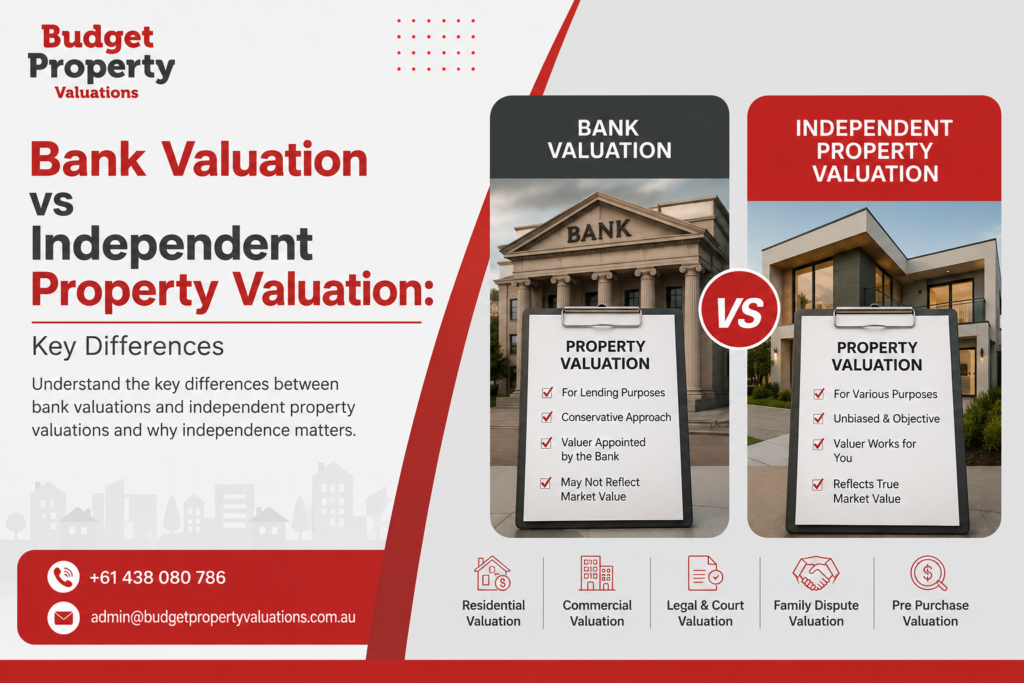
Property owners often assume that a valuation is simply a valuation, regardless of who orders it or why. In practice, a lender-commissioned bank valuation of property and a privately commissioned independent property valuation serve different purposes and intended users. Although both may be completed by qualified valuers, they are not necessarily interchangeable when a defensible figure is required for tax, legal, transfer duty, or insurance purposes. Understanding the distinction is particularly important when a bank valuation is the only report an owner has available and a different type of valuation is later requested.
This guide explains how lender-commissioned and independent property valuations differ, why a bank valuation may not be suitable for purposes such as capital gains tax, transfer duty, family law, or insurance, and what property owners should consider before relying on either figure.
SUMMARY
What This Article Covers
This guide compares bank valuations of property with independent property valuations, explaining who commissions each one, how the methodology differs, and why the two figures can vary significantly. It covers the situations where a bank valuation is appropriate, the purposes that genuinely require an independent valuation instead, and what property owners should keep in mind when a specific type of report is needed. It also answers the questions owners raise most often about this distinction.
What Is a Bank Valuation of Property
A bank valuation of property is an assessment commissioned by a lender to confirm that a property provides adequate security for a loan. It is prepared specifically for the bank’s internal risk purposes, meaning the lender, not the property owner, is generally considered the client, and the report is often more conservative than an independent assessment prepared for other purposes.
Because a bank valuation exists purely to protect the lender’s position, it typically focuses narrowly on the figure needed to support the loan amount, rather than providing the depth of reasoning, methodology, and comparable evidence a valuation prepared for tax, legal, or insurance purposes would need to include.
Why Bank Valuations Tend to Be Conservative
Lenders generally prefer a valuation that errs on the side of caution, since an inflated figure increases the bank’s risk if a loan ever needs to be recovered through the sale of the property. This conservative approach makes sense for lending purposes but can produce a figure well below genuine market value.
What Is an Independent Property Valuation
An independent property valuation is commissioned directly by the property owner, their accountant, solicitor, or another party with a genuine interest in an accurate, defensible figure, rather than a lender protecting its own security position.
Commissioned for a Specific Purpose
Independent valuations are prepared for a defined purpose, whether that is a capital gains tax event, a stamp duty transfer, a family law property settlement, an insurance assessment, or a legal dispute, and the report is structured specifically to satisfy the requirements of whichever authority or party will rely on it.
Greater Depth and Transparency
Because an independent valuation often needs to withstand scrutiny from a tax office, a court, or an insurer, it generally includes far more detail on methodology, comparable sales evidence, and the specific reasoning behind the final figure than a standard bank valuation would ever require.
Why the Two Figures Can Differ Significantly
It is common for a bank valuation and an independent property valuation of the same property to produce noticeably different figures, and understanding why helps explain which report is appropriate for a given situation.
Different Purpose, Different Client
A bank valuation serves the lender’s risk assessment, while an independent valuation serves the owner’s or another party’s specific need for an accurate, well evidenced figure, and this difference in purpose alone can lead to materially different outcomes.
Different Levels of Detail
A bank valuation is often a shorter, more streamlined report, while an independent valuation prepared for tax, legal, or insurance purposes typically involves a more thorough site inspection and a more detailed comparable sales analysis.
Situations That Require an Independent Valuation Rather Than a Bank Valuation
Several common property-related situations specifically call for an independent valuation, and a bank valuation will not be accepted as a substitute.
Capital Gains Tax and Retrospective Valuations
Property valuations for CGT purposes, including a retrospective valuation for CGT where a historical value needs to be established as at a specific past date, require an independent valuer experienced in this type of backdated property valuation work.
Stamp Duty and Related Party Transfers
In NSW, a property valuation for stamp duty, or another acceptable form of evidence of value, is generally required for associated-party, non-arm’s-length, nil or nominal-consideration, fractional-interest, and certain other transactions. Revenue NSW may accept a lender’s valuation as evidence, although a comprehensive valuation may still be required depending on the circumstances.
Family Law Property Settlements
Family law property valuations need to be prepared independently and to a standard that can withstand scrutiny from the court or the other party, which a bank valuation, prepared solely for lending purposes, is not designed to provide.
Insurance and Replacement Valuations
Valuations prepared for insurance purposes, including insurance replacement valuations, focus on reconstruction cost rather than market value, an entirely different concept to what a bank valuation assesses when confirming loan security.
Legal Disputes and Expert Witness Matters
Litigation valuations and expert witness valuation reports required for court or tribunal proceedings need to meet specific evidentiary standards that a bank valuation, prepared for an entirely different audience, does not attempt to satisfy.
When to Use a Bank Valuation and When to Get an Independent Valuation
● Use a bank valuation when a lender requires confirmation of loan security
● Get an independent valuation for capital gains tax or retrospective valuation purposes
● Get an independent valuation when transferring property for stamp duty purposes
● Get an independent valuation for a family law property settlement
● Get an independent valuation for insurance or replacement cost purposes
● Get an independent valuation for litigation, mediation or expert witness requirements
Frequently Asked Questions
Q: What is the main difference between a bank valuation and an independent valuation?
A: A bank valuation is commissioned by a lender to confirm loan security and tends to be conservative, while an independent valuation is commissioned for a specific purpose and includes more detailed, defensible reasoning.
Q: Can I use a bank valuation for capital gains tax purposes?
A: Generally no. The tax office typically requires an independent valuation prepared specifically for CGT purposes, which a bank valuation is not designed to provide.
Q: Why is a bank valuation often lower than market value?
A: Lenders generally prefer a conservative figure to protect their security position, which means a bank valuation can sit below what an independent, market focused assessment would conclude.
Q: Do I need an independent valuation for a family law settlement?
A: Yes. Family law matters generally require an independent valuation prepared to a standard that can withstand scrutiny from the court or the other party involved.
Q: Is a bank valuation suitable for stamp duty purposes?
A: No. Revenue offices generally require an independent valuation for related party or non arm’s length transfers, and a bank valuation is not accepted as a substitute.
Q: What is a retrospective or backdated property valuation?
A: It is an independent valuation that establishes a property’s value as at a specific past date, commonly required for capital gains tax purposes when an original purchase value was never formally recorded.
Q: Who should commission an independent property valuation?
A: The property owner, their accountant, solicitor, or another party with a genuine interest in an accurate figure should commission the valuation directly, rather than relying on a report prepared for a lender.
CONCLUSION
A bank valuation of property and an independent property valuation exist to answer very different questions, and treating one as a substitute for the other can create real complications when a specific figure is needed for tax, legal, or insurance purposes. Understanding which type of valuation a situation genuinely calls for is the first step toward getting a figure that will actually be accepted.
Engaging an independent valuer for anything beyond a straightforward lending requirement gives property owners the defensible evidence they need, whenever they need it.
Need an Independent Property Valuation? Contact Budget Property Valuations
Budget Property Valuations prepares independent property valuations for capital gains tax, stamp duty, family law, insurance, and litigation purposes across Sydney, Melbourne, Darwin, and beyond. Our reports are prepared specifically to meet the requirements of whichever authority or party needs to rely on them.
Visit budgetpropertyvaluations.com.au | Australia Wide